Guides
Expert security guidance for commercial sites
How we plan, specify and fit security, written up so you can use it before you call anyone.
Latest
The guides
-
CCTV How long can a business keep CCTV footage? UK law sets no fixed period for keeping CCTV footage. Keep it for the shortest time that serves your purpose: many businesses settle on around 30 days. Keep specific clips longer only for a specific reason, such as a police request or a claim. Write the period down and set the recorder to overwrite at it. Read the guide
-
CCTV CCTV signs: what UK law requires If your cameras can identify people, you need signs. Put them where people see them before they're recorded, and say that CCTV is in operation, why, who runs it (unless that's obvious) and how to contact them. A website notice alone isn't enough, and recording audio needs its own warning. Read the guide
-
Screens and counters Pay window, transfer tray or hatch? Choosing how things cross a secure counter Start with what has to cross the counter. Documents and cash need a transfer tray, usually built into a pay window. Packets need a cash packet tray, an opening that shuts needs a sliding hatch, and bulk items need a bulk transfer unit. Then match the speech system and the rating to the risk. Read the guide
-
CCTV CCTV in the workplace: monitoring staff lawfully Employers can use CCTV that captures staff if there's a clear purpose, it's the least intrusive way to meet it, and staff are told before it starts. Do a DPIA, keep cameras out of toilets and changing rooms, don't record sound without a strong reason, and say in your policy if footage may be used in disciplinary cases. Read the guide
-
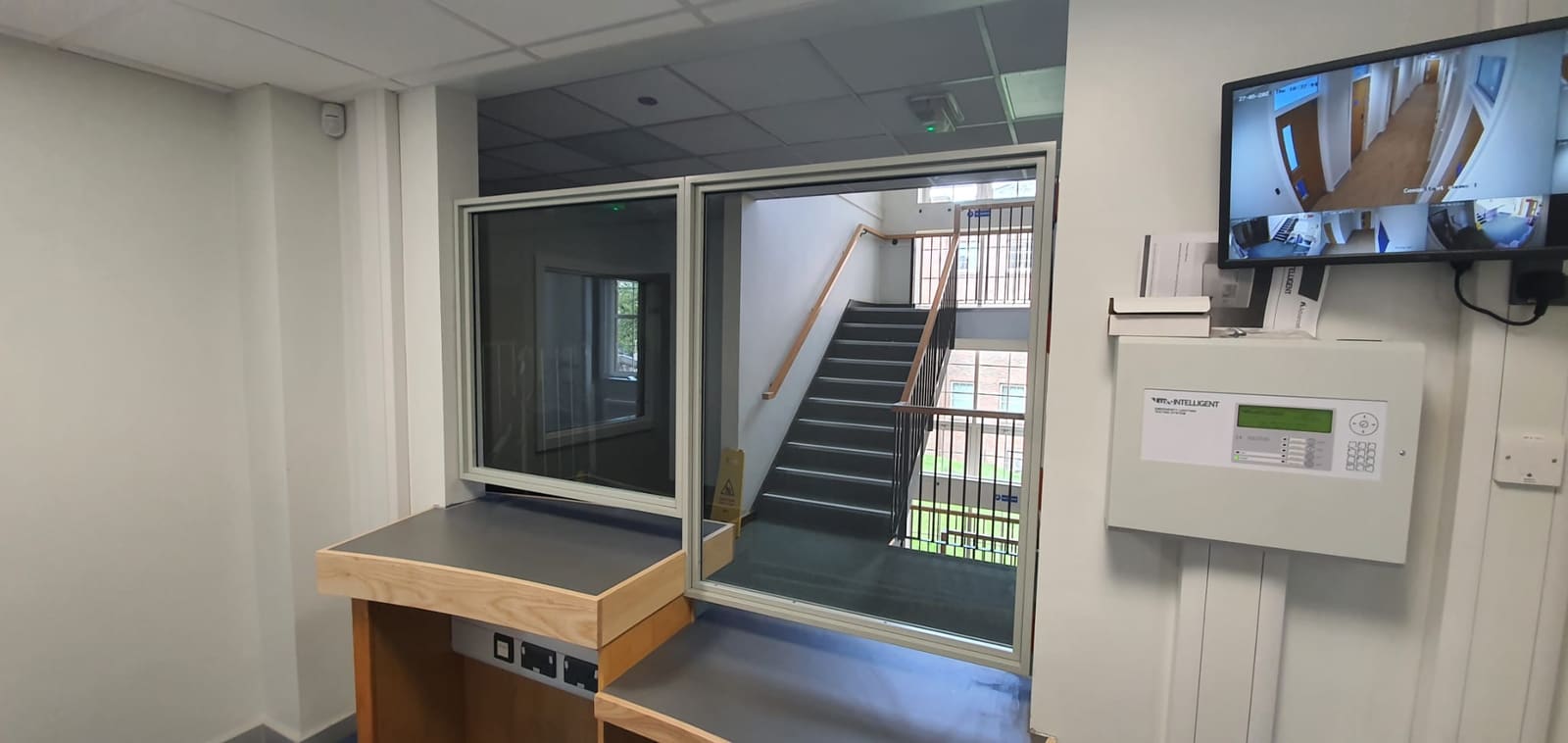
Screens and counters Accessible security counters: seated heights, hearing loops and the Equality Act A secure counter can serve everyone. In England, Approved Document M asks for at least one section 1500mm wide with a surface no higher than 760mm and a 700mm knee recess, plus a hearing enhancement system such as an induction loop. A low-level pay window and an audio tray with a hearing loop meet both without weakening the screen. Read the guide
-
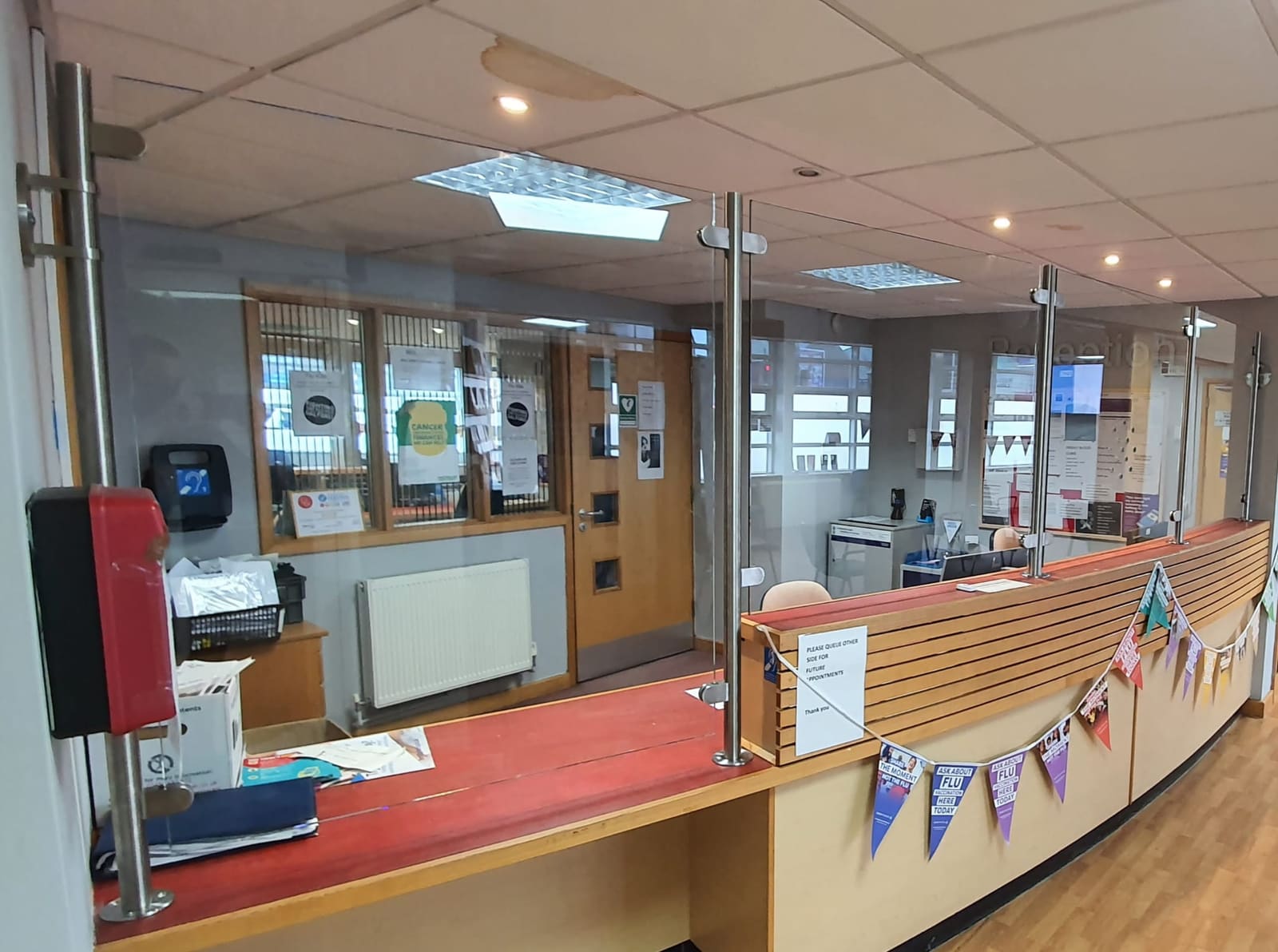
Screens and counters Protecting reception staff from violence and abuse Employers must assess the risk of violence to reception staff, including verbal abuse, and control it so far as reasonably practicable. Start with layout, queuing, staffing and training, then add physical protection to match the risk: usually a screen glazed to BS EN 356 P4A, with trays and speech systems so the counter still works. Read the guide
-
CCTV How to choose a commercial CCTV system Start with what each camera has to show, not with the camera. Identifying a face takes about 250 pixels per metre, recognising someone you know about 125, and spotting that a person is there about 25. Those figures set the camera, lens and position. Storage then follows from your retention period. Read the guide
-
Screens and counters EN 1063 or EN 356? Choosing glass for a security counter Most security counters need attack-resistant glass to EN 356, usually P4A or above. Bullet-resistant glass to EN 1063 is for sites where the risk assessment includes firearms, and the frame, tray and speech panel have to be rated to match. Read the guide
-
CCTV CCTV and GDPR: what UK businesses need to get right If your CCTV can identify people, UK GDPR applies. You need a clear purpose and lawful basis, usually a DPIA, visible signs saying who runs the cameras and why, a retention period you can justify, secure storage, and a way to handle requests for footage. Read the guide
Get in touch
Tell us what you need to protect
- 01Send a few details about the site. It takes about a minute.
- 02We call you to talk it through and book a free site survey if one's needed.
- 03You get a written specification and quote.
Useful to mention
- Any rating your insurer or a standard asks for
- Drawings or a specification, if you have them
- Photos of the area or the opening
- When you need it done